Search This Blog

Showing posts with label Communication. Show all posts

Monday, February 5, 2018

Using Feelings Candy Land


 I created this video to show how I use Feelings Candy Land in sessions. I view games in counseling as simple tools to help children open up about their feelings. Many times they do not know what they are feeling or how to communicate the feelings they have. The game helps this process along by having them identify times they felt the various feelings. Sometimes it may take a while for them to think of a time that they experienced that feeling. It normalizes verbalizing their feelings and helps them to be familiar with using I Statements to discuss their feelings.

I find that children are generally comfortable talking when in a play format, but will clam up if it is eye to eye conversation. Keeping the focus on the game allows them to explore their feelings without feeling put on the spot. I encourage children to continue using I statements when discussing feelings with others. And the more we play Feelings Candy Land the more they do use I statements!

When playing this game, I generally go with the flow of the child. If they are guarded, I give guarded response. If they are more open, I give open responses. I want them to feel comfortable with the game, not pressured to say anything in particular. If I have a child who continues to be guarded over time, I will give responses related to what I feel they need to talk about. Such as “I felt sad when my grandma died.” The key is to not be obvious and throw those responses out sparingly.

I also try to read body language to tell if a child is ready to open up and talk or if they are uncomfortable and want to continue in the game. Waiting a few seconds before taking your turn can give them an opportunity to elaborate. If they don’t, it’s good to continue on. I try to make a mental note of important things said during the game so that we can revisit them later. I also keep them in mind for choosing the game for the next session. It is not uncommon for a child to complain of being picked on. I will usually choose a game related to bullying for the next session.

Some of the older kids then I see love Feelings Candy Land, but most of them prefer UNO. I use the same concept with UNO, but just use the colors represented in UNO, red, yellow, blue, and green. I think it works just as well. I hope you enjoy the video!

To view my original post about Feelings Candy Land, click here: http://pathwaystopeacecounseling.blogspot.com/2014/10/feelings-candy-land.html

To download my Feelings Candy Land cheat sheet for free, please visit my website at https://www.pathwaystopeacecounseling.com/product-page/feelings-candy-land-game-instructions
Type "CANDY" in the discount code box to get it for free.

Saturday, December 3, 2016

Inside Out Board Game Tweeked for Counseling Use

I absolutely LOVE this Inside Out board game.  It is so well designed that the kids get excited when they see it.  I had to do some tweaking to make it work for counseling.  I simply colored in the circles to match the colors of the "islands".

Here is what I came up with:
Red - Friendship
Orange - Goofball
Purple - Imagination Land
Yellow - Family
Blue - Sports
Green - Honesty

I simply used the game as designed, but each space required the children to talk about how that island either fits the or doesn't fit them.  If it wasn't a fit for their personality, they had they told about what would fit them better.  This game gave a great platform for discussing core values.

This game also makes a great segue for another great therapy session - having them draw their own islands!  I'm looking forward to going there with some of my more artistic kids that I see.


Sunday, May 24, 2015

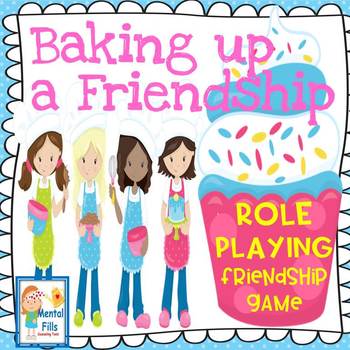
Game Review: Baking up a Friendship

Baking Up A Friendship: Girls' Role Playing Game for Keepi

I recently bought this game on Teachers Pay Teachers and I love it!  The creator took a lot of time to come up with creative ideas of how to help children learn communication and social skills.  I have played this game with several clients, and they are asking for it.

If you purchase this game, be prepared to use some ink.  There are TONS of cards and handouts that go along with the game.  To save some ink, I printed the cards on "portrait" instead of "landscape" mode and I laminated everything so that I can use dry erase markers rather than printing handouts for each time I use it.

What I love about this game is that there are so many different aspects to it that you can play it again and again and not go over the same cards repetitively.  I will also use aspects of this game in other counseling activities, such as the proper apology examples, the reflective listening script, and the script for honest communication.  I enjoy having visuals when I work with kids, as I think it helps them remember the concepts better.

Here's the link to the game: https://www.teacherspayteachers.com/Product/Baking-Up-A-Friendship-Girls-Role-Playing-Game-for-Keeping-Friends-1790143

Saturday, October 11, 2014

Feelings Candy Land


I love to play Feelings Candy Land with my clients!  We all have a good time and it provides a great platform for processing feelings, teaching kids how to use words to express emotion, and to identify problem areas that need to be addressed in future sessions.

I use Feelings Candy Land for several different reasons:
1. To help children identify feelings words and how to attach them to experiences.
2. To help children process feelings in a non-threatening format.
3. To establish rapport.  I think that it helps children normalize feelings when they realize that their therapist has feelings, too.
I created this simple PDF download as a simple guide to demonstrate how to use Candy Land in therapy sessions.  Here's the link to the free download: https://www.pathwaystopeacecounseling.com/product-page/feelings-candy-land-game-instructions
Be sure to type "CANDY" in the discount code field.

pub-2265828231785227

Sunday, September 21, 2014

Become a YES! Parent to Avoid Power Struggles

I know I may ruffle some feathers by recommending telling your children yes to avoid power struggles.  Am I crazy?  Maybe.  Here’s the deal.  Parents often give children “No” as a pat answer without really thinking through the situation, considering the feelings the children, or giving the kids a chance to problem solve.  We can avoid major power struggles by changing our answer to “Yes.” 
1.       Are you saying “No” to rescue your child? 
“Can I sleep in a tent in the backyard tonight?” “No, you’ll get scared.”  Have you ever had a situation like this?  Sometimes we feel like we are rescuing them from a scary situation by saying no.  The problem with this situation is that the child is not learning much and the parent becomes the party pooper who won’t allow any fun. 
An alternative answer would be something like “How about we try it on a Friday night so that you don’t have to wake up early.  Bedtime is at 9:00.  If you are asleep by 9:30 you can stay out there.  If not, you get to come in and sleep in your room.  Chances are if your child gets scared out there, 30 minutes is plenty of time for them to come running.  The point is, if you are afraid to let them try something because they will get scared, allow them the chance and they will make the decision to draw towards safety without you forcing them to do it.  Power struggle averted!
2.        Are you saying “No” because you can’t afford it?
“Can we go to Disney World?  My friends got to go, and I want to go!”  You know your budget and you know it’s not likely to happen.  What do you say?  Here are 2 options:
“No, honey, we can’t afford it.  Sorry.” This is an honest, straight forward answer, but hard to swallow for a child.  The child walks away disappointed and feeling like they can’t do anything to change the situation.
As an alternative, try: “I would love to go to Disney World.  It would be an amazing vacation!  Here’s the problem.  It would cost $3000 for our family to go.  Our vacation budget is $500.  Any suggestions on how to make it work?”
This scenario doesn’t say yes, but it certainly doesn’t say no.  The child has the opportunity to understand why you can’t immediately say yes and is in the position of problem solving.  He may say that he will do extra chores to earn the $2500 needed to go.  After 5 weeks and only making $25, he may have a new found respect for the value of a dollar and give up the dream.  On the other hand, he may surprise you by putting together a 5 year plan and may come up with some entrepreneurial skills!
3.       Are you saying “No” because his or her behavior is a problem?

“Mom, can Sam come over to play after school?” The question sparks vivid memories of children running around like wild hogs destroying your home. You may be thinking “I’m never going through that again!”  You have an opportunity to allow your child to learn to monitor their behavior and set limits with their friends.  This could be a good life skill.
Try this: “Last time Sam came over you made some bad choices and our house was a mess!  I’m willing to give you another chance, but here are the rules.  If the rules are broken, Sam will be loaded into the car and quickly delivered home.  Do you agree to my terms?”  I would also include something along the lines of you are responsible for cleaning up the messes that your friends make.  Do you still want to have them over?
Are you catching the leverage you have by saying yes?  Sure you can have the ice cream, after you eat your meat loaf.  You are welcome to play outside with the neighbor kids just as soon as your homework is done.  You bet you can watch your favorite show as soon as your room is clean.  When your child hears yes, they feel hope.  When they hear no, they feel angry!
4.       Are you saying “No” because of time constraints?
“Mom, can I play football this year?”  You know that he will have to practice after school at least 3 days a week, which conflicts with your work schedule.  No sounds like a logical answer.  But simply stating no does not give him the chance to use his problem solving skills or to own the situation.  One basic principle in successful parenting is allowing your children to own their problems and you own your problems.  If you are willing to allow him to solve his problems and come up with solid solutions, he will learn to overcome obstacles in life and will become a more productive adult. 
How about this: “Sure you can play football.  How are you going to get to practice?”  He may already have some ideas.  He may choose to ride his bike, catch a ride with a neighbor, or walk.  He may realize that the schedule is too much of a problem and decide for himself that it won’t work.  The goal is to allow him to figure it out.


Am I saying that you should always say yes and never say no?  Absolutely not.  There are times for no.  However, when you say “No” as a pat answer and your children are hearing it all the time, they will get frustrated and want to challenge you at some point.  Children need to learn the consequences for their choices while they are young and the ramifications for those decisions are small.  Saying yes, even when you know your child will fail, will allow them to work through feelings of disappointment, frustration, and failure while you are still there to help them through.  If they aren’t allowed to make these choices until they are adults, the consequences will be much more severe.